






ANGER
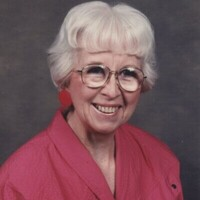
By June H. Goins
Proverbs 16:32: “He that is slow to anger is better than the mighty; and he that ruleth his spirit than he that taketh a city.”
Anger is only one of the many emotions we deal with in striving to rule our spirits. It is easy to give in to the passions of the flesh, to allow anger to arise in haste and give vent to that anger in an outburst of words which can never be recalled, hurting ourselves and others. We are told by learned men that it is better to express our anger than to repress it. Beyond doubt, this is true, but in order to properly rule our spirits, we must take care to avoid becoming angry to begin with—we must be “slow to anger.” The phrase “slow to anger” would suggest some consideration of a matter before becoming angry, rather than a hasty, unjustified rise of temper.
Many times, if we pause and think, we will find some degree of understanding replacing the anger we would have felt had we jumped to conclusions. “He that is slow to anger is better than the mighty.” “Mighty” means “possessing might, strength, and power.” We find in 2 Corinthians 10:4, “(For the weapons of our warfare are not carnal, but mighty through God to the pulling down of strong holds:)” Thus, we can see that in order to rule our spirits, which includes controlling our anger, instead of carnal weapons, we are to use those which are “mighty through God to the pulling down of strong holds.”
The proverb under consideration tells us, “He that ruleth his spirit (is better) than he that taketh a city.” How is a city taken? The same as the “palace” in Luke 11:21-22. “When a strong man armed keepeth his palace, his goods are in peace: But when a stronger than he shall come upon him, and overcome him, he taketh from him all his armour wherein he trusted, and divideth his spoil.” As one who takes a “palace,” surely one who “taketh a city” must be armed. No one would attempt such a feat without the means of carrying out his plans. In order to rule our spirits (“to be in command”), we must strive to do as Paul when he said “…I keep under my body, and bring it into subjection…” (1 Cor. 9:27). And to do this, we must heed the Scriptural instruction to “put on the whole armour of God.” We cannot rule our spirits nor take a city when we are wearing our own armour which is carnal –giving in to the dictates of the flesh (anger, etc.) without resistance, trying to work out our problems without divine guidance, forgetting to consult the Lord, trusting in ourselves, leaning upon the arm of the flesh—keeping our own palace with our carnal goods in peace.
“But when a stronger than he shall come upon him, and overcome him, he taketh from his all his armour wherein he trusted, and divideth his spoils.” Who is this “stronger than he” who shall “overcome”? Surely it is the Lord who said, “Be of good cheer; I have overcome the world” (John 16:33). If the Lord has overcome the external world, surely His Spirit within us is able to overcome the internal world of our own irrational emotions. Only by His Spirit are we enabled to keep an orderly house within—crucifying the lusts of the flesh, and yielding instead the peaceable fruit of righteousness. Only by looking to the Lord are we able to subdue our bodies, bring them into subjection, and rule our spirits.
Surely he whose mind is stayed on God shall be slow to anger and shall rule his spirit.
Sister Goins: Of Pulaski, VA. (May 1, 1932 - July 18, 2020).